Sunday morning, I remember seeing a guy walking up the Armory's stairs with boxes strapped to his side, fumbling posters and coffee to set up just before the gates opened and hundreds of people began walking through to shop. And, it made me appreciate the physical challenge we "mom and pop" creators face at these conventions... "the set up"... waking early in the morning, lugging books and t-shirts and all the other merch, carrying it all miles from here to there, to set up shop shoulder to shoulder among PVC pipe make shift poster holders, hundreds of tables, cluttered ideas and styles. And it all reminded me of those nomadic merchants in 1500's who traveled to distant Asian lands, only to return to Europe to set up a makeshift weekend shop in a crazed dark market. I'm sure even back then they had mornings like I had on Sunday. Moments, in mid yawn, waiting for strangers to arrive en-mass... either to buy or rummage through the things we had brought to them from another world.
Tuesday, April 12, 2011
MOCCA NOMADS
Sunday morning, I remember seeing a guy walking up the Armory's stairs with boxes strapped to his side, fumbling posters and coffee to set up just before the gates opened and hundreds of people began walking through to shop. And, it made me appreciate the physical challenge we "mom and pop" creators face at these conventions... "the set up"... waking early in the morning, lugging books and t-shirts and all the other merch, carrying it all miles from here to there, to set up shop shoulder to shoulder among PVC pipe make shift poster holders, hundreds of tables, cluttered ideas and styles. And it all reminded me of those nomadic merchants in 1500's who traveled to distant Asian lands, only to return to Europe to set up a makeshift weekend shop in a crazed dark market. I'm sure even back then they had mornings like I had on Sunday. Moments, in mid yawn, waiting for strangers to arrive en-mass... either to buy or rummage through the things we had brought to them from another world.
Friday, December 31, 2010
2010 _ Blacklight Bites
I posted a deeper (longer) reflection on the year on my art blog Paws as Hands but I wanted to add a few quick hits here for some standout Blacklight moments:
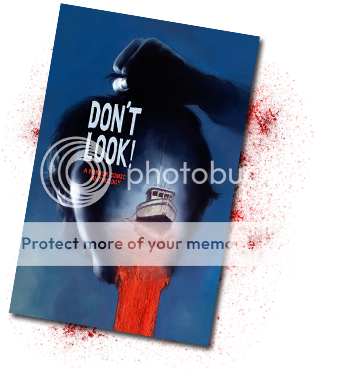
- Seeing our first collaboration, Chris' short FROZEN DARK, published and collected as part of the DON'T LOOK! Anthology. Editor Rick Ritter is a co-worker who was one of those guys who initially poked me to start doing comics again. The final product is a quality, diverse collection that includes a number of other friends, old and new. Plus, I thought that Chris came up with a great title in DON'T LOOK! and Dave Palumbo wrapped it all in one striking cover. Looking forward to more from the LAST MINUTE COMICS crew.
- Traveling to San Diego with Swift for the Convention. From the moment we landed it was an adventure. The streets were thick with fans and our local driver/ friend/ escort yelled at them all the way. From Backstreet Boy bracelets to Wolf Costumes to Gorging on Tapas to Our Chat with Steve Lieber to He-Man Dioramas to Our First Signing and Panel to the After Party with Archaia peeps it was an unforgettable whirlwind not even two days full.
- That a random Facebook post about my cat reconnected me with Nathalia Ruiz Murray, who now could not be a more perfect fit as translator on FEEDING GROUND. She's taken on the role of a diligent writer and linguist who brings so much to the book and ensures more than some rote dictionary translation.
- Being a regular listener of the INK PANTHERS Podcast and then being invited on as a guest. Ostensibly a comic podcast, it's hardly ever about comics and it's more about the banter of the hosts. The funniest thing I listen to every week.
- Our most recent meeting at my home to discuss the beats for FEEDING GROUND #5. It not always easy to collaborate with friends but we've worked hard to be respectful of each other's working style and schedule and tastes. With this meeting I think we hit a groove that was apparent, asking the right questions and field testing solutions to make sure they held water. A perfect end to the teamwork of this year and standard to continue in 2011.
Thursday, December 30, 2010
The Art of the Small --- Looking Back on 2010

By Chris Mangun
I work in Pharma Advertising... the fine print industry. One day, one of our best art directors Huy Hygen (who’s name is pronounced We Win and most enjoyable to say)… anyways, we got into a conversation about fonts and how hard it is to choose the right font to go with the right art. Whether recognized or not, Helvetica feels different from Eurostyle, some might say, more minimal or genteel than the latter. Out of the conversation came the notion that, “People spend more time per capita focused on words than images since they must read letters.” Typography opened my eyes to how every shaped letter is its own piece of art and that someone spent years working on this alphabet, maybe a whole 2 weeks on the letter G! Golly-gosh, someone even made a movie about it “Helvetica”… a splendid documentary on fonts if you’re interested.
I mention all this because a lot of my work on Feeding Ground is lettering each issue. Every month, my eye goes to the screen for hours, tweaking little letters, judging font size, considering spacing, etc. In those hours of work, I sometimes would stop and ask myself, how important is lettering? Do people really care if we use CC Gibbons or Spooky Art over Times Roman? And the answer was always the same, yes. When it comes to comics, choosing the right font is cornerstone to setting the right tone or feeling of a visual story.
This year, I learned why balloons have their own “Live” or “safety” area, which is the distance I want to keep the text from edge of the balloon. Being without special effects of TV or sound, I learn that changing a word’s color or outlining it to stretch it, or making it into sound effects can change the way someone feels or even hears a word. The biggest challenge I had in lettering, what made me really focus in on this little art, was working with accents on the translated flip-side of our issues. Español has accents over certain letters, reverse punctuation, and for whatever reason well styled comic fonts are lacking these accents. This means, I had to place individual “tildes” over dozens of ñ’s and accents over many other letters.
Lettering really is the art of the small… that background craft of creating finely fixed symbols, tiny canvases of meaning, well placed amongst bigger meaning. The best at this craft, allow readers to feel something without having to knowingly feel it.
What I know about lettering comics I learned through “DC Comics Guide to Coloring and Lettering” and a lot working with Michael Lapinski who has built up a great awareness to the art of the small and coached me when I needed it. This year, like lettering, had so many small moments. Many were spent working on this fine comic, which taught me about collaboration with friends and looking closely at how beautifully complicated pockets of time can be summed up in a few well designed words.
Wednesday, December 29, 2010
Reflections on 2010
Learned so much this past year, and wanted to take a moment to reflect on what this year has taught me. 2010 has been an absolute blur, so I felt a stream of consciousness-style response is most applicable.
Listen to your artist when something isn't working, you really share the same end goals. Read the reviews, sometimes they sting, but this can be the most objective feedback you get. Be true your intentions. You are doing this because you have something to say. Try to tackle something current, but make sure it's personal.
Remember how fortunate you are to be a part of the comics community. I have met many in the industry whose talent is matched by their generosity and intelligence. Read widely, beyond comics. How else is your work not going to be solely referential.
Try to engage the people who are supporting your work as opposed to waiting for an introduction. Ultimately the work should connect you with like-minded people. Talk to people who do not read comics. I've gotten some of my best ideas that way. Be willing to fail, it's the only way you have a chance at success. Remember to love doing the work, at the end of the day, it is the only thing in your control.
Wednesday, November 24, 2010
THANKFUL
FEEDING GROUND #1 has been shipping across the country these last few weeks and it has finally landed on our home coast. In honor of the book's release and tomorrow's holiday, here is our THANK YOU page text as it appeared in the back of the issue. Happy Thanksgiving to you and your families.
It might not be customary to include "thank yous" in the
first issue of a comic but this was a labor of love almost
two years in the making. It would not have happened if
not for the people below and we'd like to express our
gratitude.
As a group, we benefited greatly from the insight and
experience of Thomas Peyton, the counsel of Suzana
Carlos, and the encouragement and camaraderie of artist
Juan Doe. Great thanks to everyone at Archaia not only
for taking a chance on us, but also offering advice and
support that recognized what we were doing and then
made it stronger.
SWIFTY LANG would like to thank the following people:
I would like to thank my parents, my brother David and
sister Samantha for believing in me. I would like to thank
my Uncle Neal for giving me the GI Joes that kept my
imagination rollin’. I’d like to thank my cousins B.B. and
M.B. for proving that writing can be more than a hobby. I
would like to thank all of my friends in Hollywood, Florida,
NYC, LA and world-wide. I’d like to dedicate this to my girl
Spooky, for listening without judgment, reading every
draft, and putting up with a grown man arguing about
werewolves when he barely had a job.
MICHAEL LAPINSKI would like to thank the following
people: Cartoonists Rick Ritter, Mike Dawson, GB Tran and
the guys of MAMMAL, their art and dedication convinced
me to get back into making comics. Paul Zdanowicz,
horror guru and Lapinski-booster with a keen critical eye.
Klaus Janson, whose professional instruction came just at
the right time to bring structure and rules to what I had
been discovering on the page. Brian Michael Bendis for
providing the Jinxworld message board and its posters for
keeping me company in the solitude of my man cave. To
my parents and family, whose generous affection has
always allowed me to thrive. And, to Lindsay, thanks for
adding sweetness to my life and for riding this wolf with
me to Bayonne and beyond.
CHRISTOPHER MANGUN would like to thank the following
people: His father Rick, who taught him craftsmanship. His
mother Kathie, who taught him how to work with people.
His sister Jenny, who open his eyes to ideas and music at
the right time. His brother Rob, the best entertainer he
knows. His Uncle Tim, for evoking storytelling as an
important part of him. And most of all, his best friend Mel,
who believed in him through unbelievable weekends and
continues to do so with kind support. Also, Pale Ale beer...
Yes, he know that's not a person, but it is a friendly spirit
that sometimes helps grease the pleasant grind of
so-called-life-events.
Finally thanks to YOU, the reader, for giving this a shot and
holding this in your hands. CHEERS!
Friday, November 5, 2010
KING CON _ The Blacklight Table
We're going to be at King Con comic convention in Park Slope, Brooklyn this weekend and you should too!
And... Pulparindo!
This Pop Tart of a Con poster is by talented cartoonist and friend, GB Tran.
Tuesday, October 19, 2010
Revision...Taming the Beast

Swifty here-
The act of collaborative writing seems potentially disastrous. How is a unified character psychology established? How does one decide upon motivation, action, a characters voice etc. The process is wrought with frustration.
One of the things we have done is establish "kill cards" and "save cards" in which we are each allowed through democracy to kill those bits of story that are simply not reading well. If the writer is responsible for killing their darlings, we have set-up a firing squad. Ultimately, as a writer, it is important to always remember that your team has the collective goal of telling the best story possible, and not trying to tell their story.
With comics being a visual medium, pace is king, and conveying the most efficient flow of visual information is ultimately the most effective way of telling a story. Personally speaking, because this is my first go at creating a comic, my first draft of issue 1 was so packed with narrative information, the story ultimately was plotted over three issues. The revision was necessary, and allowed the story to breathe in a way that created a far more compelling narrative. The rewriting process for issue 1 took a year. Issue 4 has been written in under a month. Our work flow is improving.
One of the steps that allowed for this new efficiency has been employing the Marvel Method. Michael, Chris, and I will sit down together and beat out the plot points. From there, Michael will establish how much real estate panel wise I have to establish the emotional moments of the scene and convey the most information possible in the fewest words. I have a tendency to pack my panels and that doesn't always hit the mark. Comics has forced me to really layer my work and infuse each word with meaning so that it's echoes are felt throughout the entire series. It is a process more similar to constructing a poem than to telling a story. There is little room for digression.
After the draft is complete, it's time to bring in the firing squad, the only exception being, I know exactly where the bullet is coming from.